In padel, you spend your time braking, restarting and moving laterally on sand-covered artificial grass. Running shoes slip on this surface and provide poor ankle support during lateral movements. Padel shoes are designed for these movements: a sole that grips the artificial grass, suitable cushioning and good foot support. This guide explains how to choose your padel shoes, then compares five models listed on Amazon.co.uk on 28 November 2026, based on what the brands state.
The essentials in 30 seconds
- Sole: herringbone (fishbone pattern) for artificial grass, the most common surface in the UK.
- Support: a shoe that is stable laterally and holds the heel.
- Cushioning: useful for long sessions, without sacrificing stability.
- Size: try them on at the end of the day with your sports socks, leaving about half a centimetre in front of your toes.
Why padel-specific shoes?
Padel is most often played on artificial grass covered with sand. This surface is both abrasive and slippery. Movements are short, quick and very lateral, with lots of braking near the glass walls. A running shoe, designed for forward motion, offers little lateral support. A "clay court" or "all-court" tennis shoe is closer, but a sole designed for padel is the most suitable option.
Criteria for choosing your padel shoes
The outsole. The herringbone sole is the benchmark for artificial grass: its ridges grip the surface without retaining too much sand. Some mixed soles combine herringbone and small studs. An omni sole (small studs) is suitable for smoother synthetic surfaces. Few Amazon product sheets detail this point: the Wilson CourtGlide in our selection is one that does.
Cushioning. Each brand has its own foam: Bounce or Cloudfoam from adidas, R-DST from Wilson. Thicker cushioning provides comfort over time, while a thinner sole gives more ground feel.
Support and stability. Look for a well-held heel and lateral reinforcements. Head, for example, highlights a TPU 3D midsole and a support strap on the Motion Team 1.5.
Size and width. A padel shoe should hold the foot without compressing it. Take your usual sports size, and check that the heel does not lift during movements.
Men's or women's. Women's versions are generally built on a narrower foot shape. Above all, choose the shape that fits you, regardless of the label.
Sole
Herringbone grips on artificial grass; an omni sole suits smoother courts.
Cushioning
Thicker means more comfort; thinner means more feel for the court.
Side support
Padel is played moving sideways: a held heel and side reinforcements.
Fit
The shoe holds the foot without squeezing it, and the heel does not lift.
Our selection of padel shoes
These five pairs were selected from their manufacturer and Amazon product listings. We did not play with them: the characteristics mentioned are those stated by the brands. Prices vary according to size and colour: choose yours on the Amazon page. The listings were checked on 28 November 2026.
Wilson CourtGlide: the most detailed for artificial grass
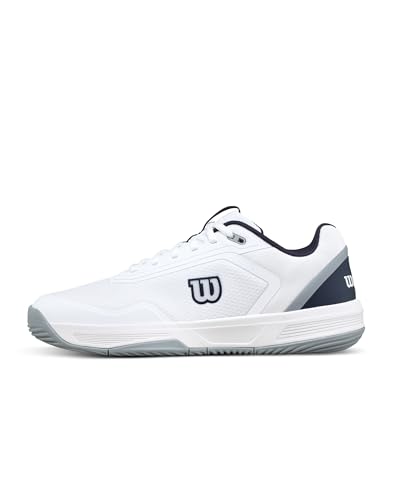
Wilson presents the CourtGlide as a padel shoe for improving players. The brand states a modified herringbone outsole for artificial grass and hard courts, an R-DST midsole that balances cushioning and support, and a close-to-foot fit, seamless. This is the most complete product sheet in this selection, and our default choice.
adidas Courtquick men's: a first pair of padel shoes

adidas states a standard fit, a textile and synthetic upper, Cloudfoam padding and a Bounce midsole. It is presented by the brand as a padel shoe. The product sheet does not detail the outsole pattern.
adidas Courtquick women's: the women's version

The women's version takes the standard fit and textile and synthetic upper, with a Cloudfoam Plus midsole. As with the men's version, the product sheet does not specify the outsole.
adidas Crazyquick Lightstrike: for players who want lightness

adidas highlights a lightweight midsole and Lightstrike cushioning, with a standard fit. This is the model in the selection geared towards movement speed.
Head Motion Team 1.5: support above all

Head states a shoe designed solely for padel, with a TPU 3D midsole incorporating Lateral Control technology, a Lockdown Strap to hold the foot, a padded tongue and a mesh upper. A good choice if you are primarily looking for stability during movements.
Mistakes to avoid
- Playing in running shoes: they slip on sandy artificial grass and hold the foot poorly laterally.
- Choosing too large a size: the foot moves in the shoe during braking.
- Keeping a worn sole: when the herringbone is worn, grip decreases significantly.
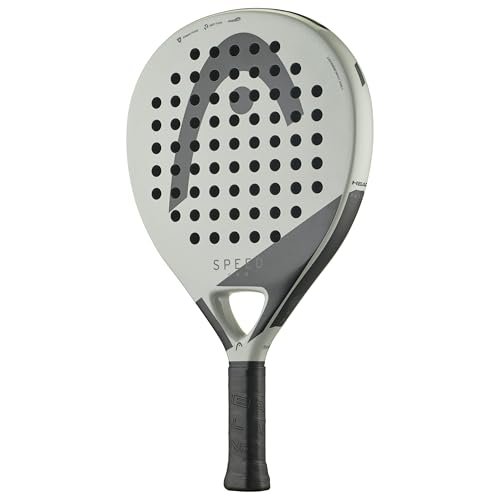
- Neglecting the racket: good shoes do not compensate for an unsuitable racket. See our guide on which padel racket to choose.
FAQ
Which sole for padel shoes?
A herringbone sole is the most suitable for sandy artificial grass, the most common surface. An omni or mixed sole is suitable for smoother surfaces.
Can you play padel with tennis shoes?
Yes, a clay court or all-court tennis shoe will do in a pinch, as it offers good lateral support. However, a sole designed for padel grips better on sandy artificial grass.
Do you need padel shoes to start playing?
It is not mandatory for a first session, but as soon as you play regularly, a suitable pair improves grip and stability. For the racket, see our selection of padel rackets for beginners.
Sources
Characteristics recorded on 28 November 2026 from the manufacturer and Amazon product listings for the shoes mentioned (texts provided by adidas, Wilson and Head). The chart compares the midsole, outsole and support as described by the product sheets. Only the Wilson product sheet specifies the outsole. No product sheet indicates the weight of the shoe.